
May in Ontario: Swarm Season Begins

May is often the month when the season begins to accelerate in the apiary.
Colonies that were building steadily in April can suddenly feel much stronger. Brood expands, bees begin filling frames more quickly, drones are present, and the first signs of swarm season may begin to appear.
This is the time to watch growth closely.
Swarm season begins
In many areas, May is when swarm season starts.
A strong colony in spring can grow quickly, especially when forage is coming in and the hive begins to feel crowded. As the population rises, the colony may begin preparing to divide naturally by swarming.
For the beekeeper, this means May is a month of careful observation and timely decisions.
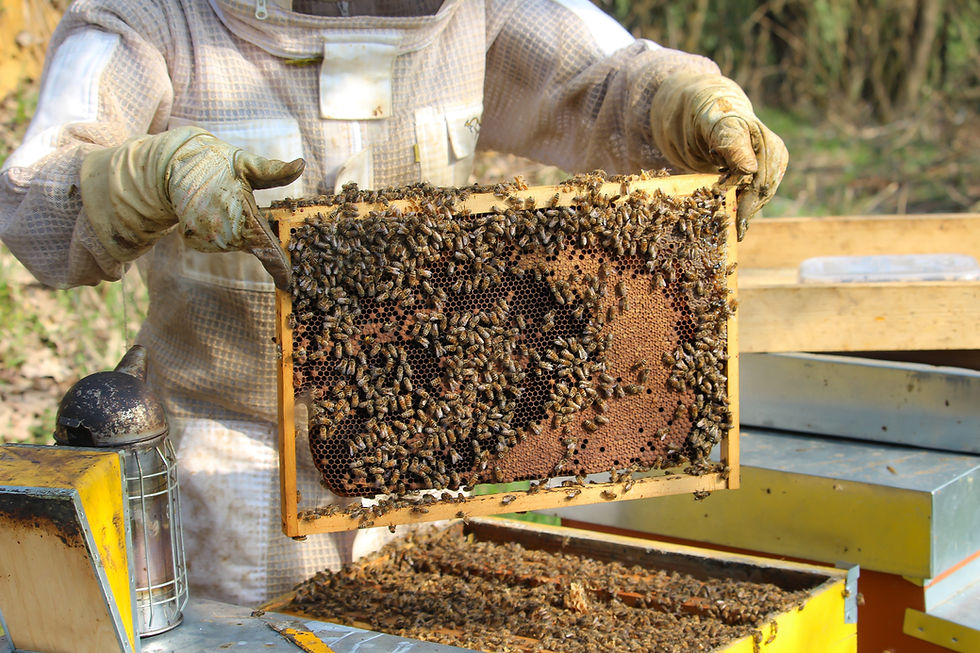
Check hive growth
At this stage of the season, it helps to ask:
• Is the brood nest expanding quickly?
• Are frames becoming crowded with bees?
• Is nectar starting to fill available space?
• Does the colony still have room to grow?
A fast-growing hive may need action sooner than expected.
Depending on the condition of the colony, this may be the time to:
• add space if the hive is becoming congested
• add honey supers if nectar flow is beginning
• make a split if the colony is very strong and showing signs of swarm preparation
The goal is not simply to react, but to stay a little ahead of the hive.
Watch for queen cells
Queen cells are one of the most important things to look for in May.
But their meaning depends on where they are, how many there are, and what the rest of the hive looks like.
A few general patterns can help:
• Several queen cells, especially near the lower edges of frames, may suggest swarm preparation
• One or two queen cells, often more central on the comb, may suggest the colony is replacing the queen
• Emergency queen cells can appear if the colony has suddenly lost its queen
queen cells in the middle of honeycomb queen cells in the bottom of honeycomb
Queen cells should never be read in isolation. Their significance depends on the overall condition of the hive - brood pattern, crowding, queen performance, and the strength of the colony all matter.
In May, they are often a sign that the hive is changing direction.
Drones are back
Another clear sign of the season is the return of drones.
Drones are the male bees of the hive, and their appearance tells you that the colony is moving into a reproductive phase. You’ll often notice them by their:
• larger bodies
• bigger eyes
• heavier, louder flight
They do not forage or defend the hive. Their role is to mate with a queen from another colony.
Seeing drones in May is normal and expected. It is one more sign that the hive is no longer in early spring - it is fully entering the active season.
Plant your pollinator garden
May is also the right time to think beyond the hive.
As bees and other pollinators become more active, this is a beautiful time to plant a garden that supports them through the weeks ahead. Wildflowers, flowering herbs, and pollinator-friendly seed mixes can help extend forage and bring more life into the garden.
You can start with:
• a wildflower mix
• a few individual flowers for bees
• or a tea garden that is both useful and pollinator-friendly
A small space is enough to begin.
Don’t forget water
As the season builds, bees need reliable access to water.
Worker bees use water to help regulate temperature inside the hive and to support brood rearing. In warm spring weather, a nearby water source becomes especially important.
A shallow dish with stones, pebbles, corks, or branches can help give bees a safe place to land and drink. If you provide water early and keep it consistent, bees are more likely to return to it rather than searching elsewhere.
This is a small but meaningful way to support the hive through the growing season.
A month of growth and decisions
May is full of possibility in the apiary, but it is also a month that asks for attention.
The hive is growing quickly. Swarm season may be beginning. Queen cells need to be read carefully. Drones are present. Space matters.
And just beyond the hive, the garden is ready to grow too.
This is the month to observe closely, respond thoughtfully, and support what is building — both in the colony and in the landscape around it.
To explore further
Plant for pollinators with our garden collection, including wildflower seeds, tea garden seeds, and simple ways to begin growing this season.
Stay Connected
If you’d like to receive future entries from Seasonal Apiary Notes and updates from the apiary, consider signing up for our newsletter.
Comments