
July in Ontario: Honey, Heat & Mite Checks

July is one of the most important months in the Ontario apiary. The bees are busy, honey supers are getting heavy, and strong colonies can change quickly from one inspection to the next.
This year, many colonies seem to be growing especially fast. After the very hot days in June and steady garden growth, some hives have built up sooner than expected, filled space quickly, and needed closer attention from week to week.
July is exciting because the results of spring work are now easy to see. It is also a month when small delays can create bigger problems. A hive that needs space, water, mite monitoring, or a timely split should not be left too long.
The main July jobs are simple but important: keep honey supers ahead of the bees, check whether the first harvest is ready, watch for heat stress, consider splits from strong colonies, monitor mites, and start thinking about the bees that will carry the colony toward winter.
Honey Supers: Stay Ahead of the Bees
In July, honey supers often become the main focus.
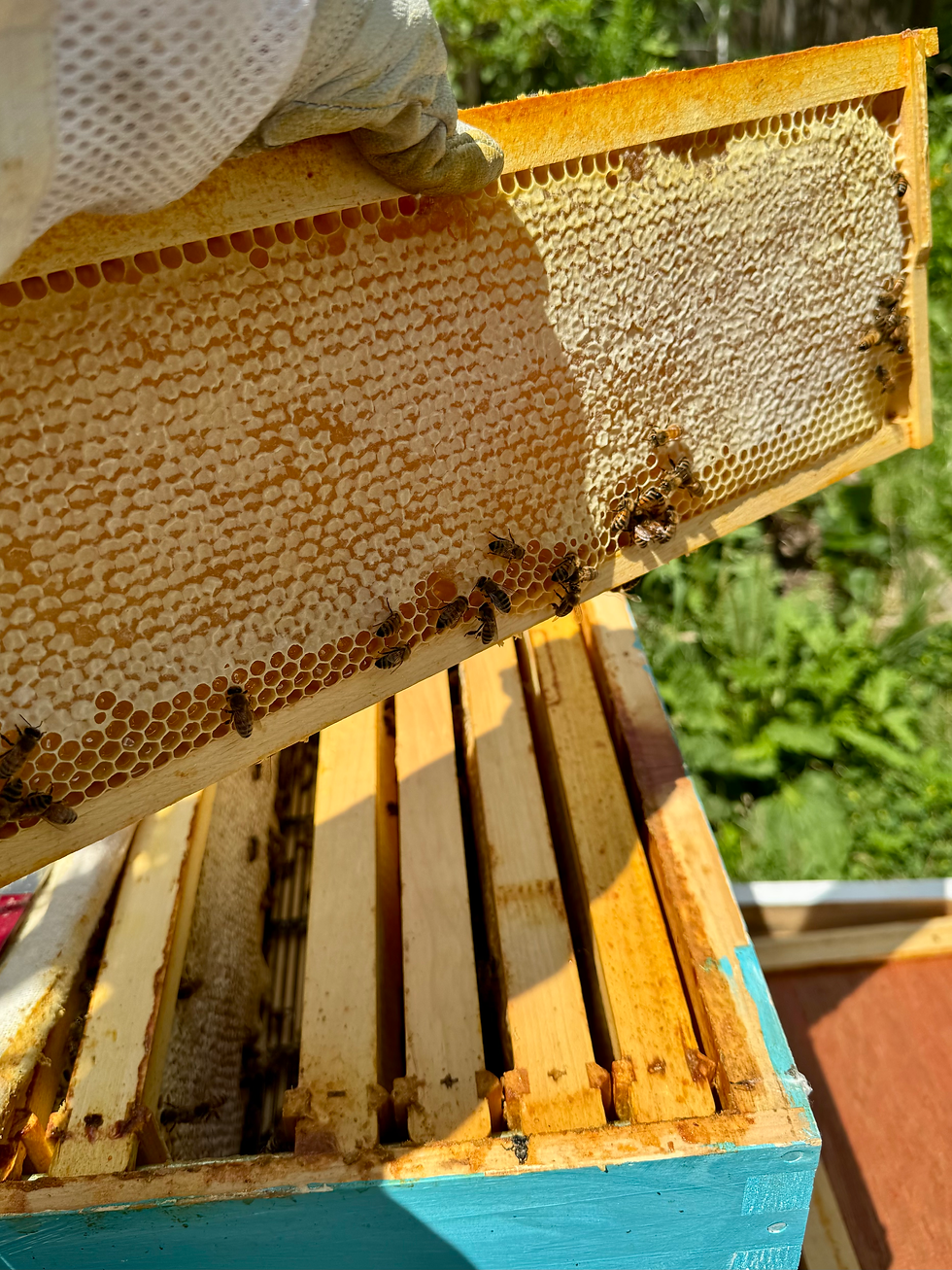
During a strong nectar flow, bees can fill available space faster than expected. A super that looked only partly worked one week may be much heavier the next. This is especially true in a year when colonies are already growing quickly.
When checking supers, look for:
Bees covering the frames
Nectar being stored in open cells
Honey beginning to be capped
Frames becoming noticeably heavier
The colony working the outer frames, not only the centre
If the bees are working most of the frames and the flow is still on, it may be time to add another super. Giving space before the hive becomes crowded is usually better than reacting after every frame is full.
Strong colonies need room to work. When they do not have enough space, nectar can be stored in the brood nest, the hive can become congested, and productivity may slow down.
July First Harvest: Is the Honey Ready?
For some Ontario beekeepers, July may bring the first honey harvest of the season.
A heavy super is exciting, but weight alone does not always mean the honey is ready. Before pulling frames, check how much of the honey is capped. Capped honey is usually the best sign that the bees have ripened it properly.
Frames that are mostly capped are better candidates for harvest than frames still holding open nectar. Open nectar may still contain too much moisture and may not store well.
A practical way to think about the first harvest is this: take what is ready, leave what still needs time, and make sure the colony still has room to keep working.
After harvesting, return space to the hive if the nectar flow is continuing. In a strong July season, the bees may keep filling supers, and giving them room can help keep the colony productive through the rest of summer.
Hot Weather, Bearding, and Water
July heat can put real pressure on a hive.
On very hot days, bees may gather on the front of the hive in a large cluster. This is called bearding. It can look dramatic, especially in the evening, but it is often normal behaviour in a strong colony. The bees are moving outside to reduce crowding and help regulate the temperature inside the hive.
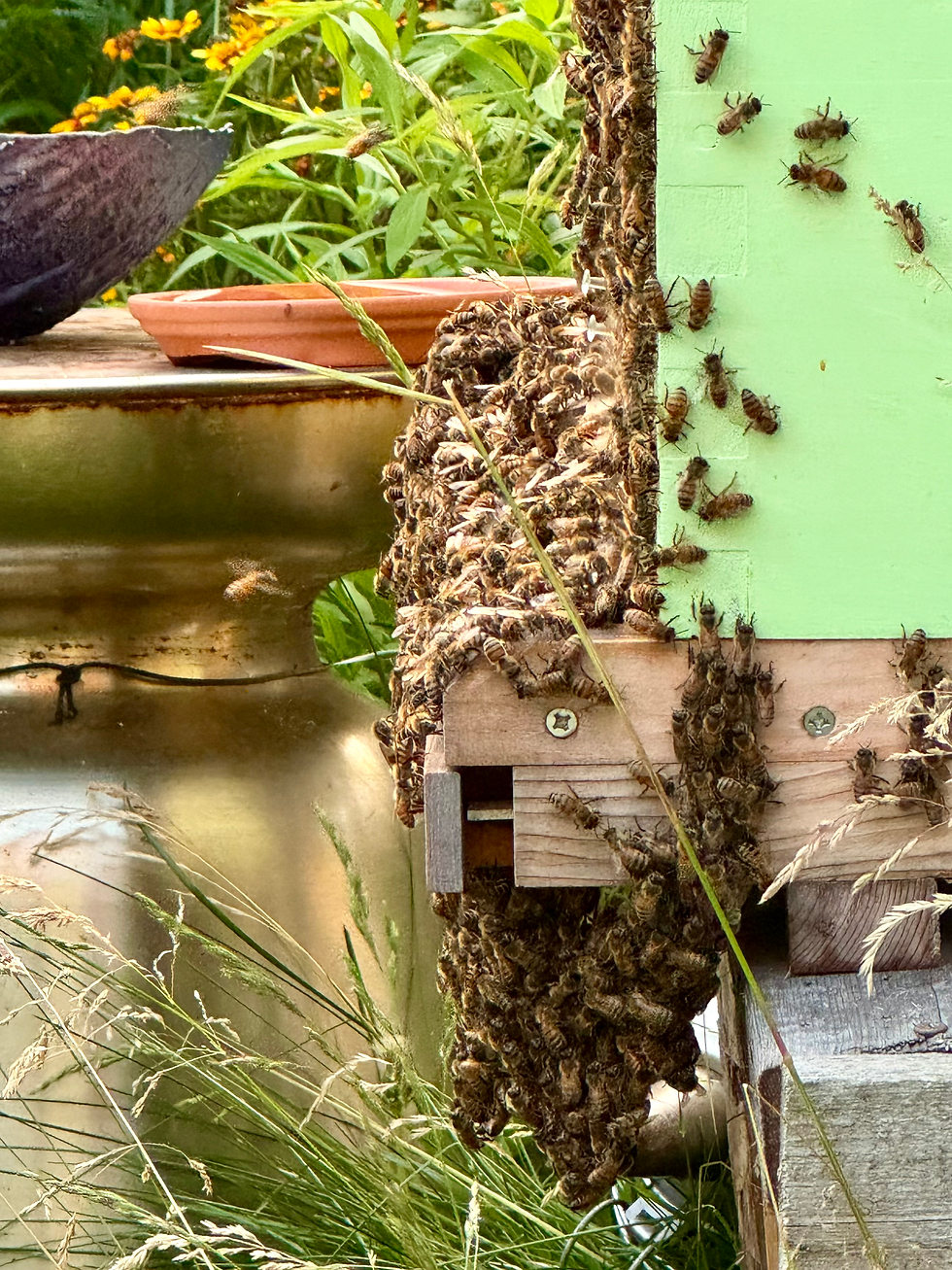
Bearding is not a problem by itself. The important question is what else is happening in the hive.
Check whether the colony has:
Enough space
Good ventilation
Access to water
A strong but not overly congested brood nest
Supers available if nectar is coming in
Water matters more than many new beekeepers realize. Bees use water to cool the hive and maintain the right conditions for brood rearing. A shallow water source near the apiary can help, especially during hot, dry weather.
July Splits: Building for Winter Starts Now
July can still be a useful time to make splits, especially from strong colonies that have built up well through spring and early summer.
A July split is not only about making more hives. It can also be part of preparing the apiary for winter. A split can help manage a crowded colony, create a backup queen, replace losses, or build an extra colony that may be overwintered if it grows well enough.
With bees growing faster this year, some strong colonies may be good candidates for splitting. A fast-growing hive can sometimes spare bees and brood while still continuing to work the honey flow.
A July split needs a strong start. Before making one, consider whether you have:
Enough bees to cover the brood
Frames of brood at different stages
Food or access to feed if needed
Drawn comb to help the colony build faster
A laying queen, queen cell, or a clear plan for queen replacement
Enough time left in the season for the split to grow before fall
Smaller or later splits may need closer attention. Watch for steady population growth, a good brood pattern, enough food, and enough comb for the colony to expand.
A split that builds well through late summer can become a valuable part of the wintering plan.
Mite Checks: A Summer Job With Winter Consequences
July is also an important month for varroa mite management.
A colony can look strong on the outside while mite levels are building in the background. Lots of bees, good foraging, and heavy supers do not always mean mite pressure is low.
This is why mite checks matter in summer. July is close to the time when colonies begin raising the bees that will carry them through late summer, fall, and winter. If mite levels are allowed to rise too high, the colony can enter fall under stress even if it looked strong earlier in the season.
In July, beekeepers should be thinking about:
Checking mite levels
Keeping records from each hive
Watching trends, not only single results
Considering treatment timing
Matching any treatment to honey supers, temperature, and label directions
The goal is to stay ahead of mite pressure before it affects the colony’s ability to raise healthy bees for the months ahead.
Reading the Brood Pattern
By July, a healthy colony should have a strong population, steady brood, and plenty of foragers coming and going.
A good brood pattern is one of the clearest signs that the colony is queenright and functioning well. You do not always need to find the queen during every inspection. Eggs, larvae, capped brood, and a consistent pattern often tell you what you need to know.
Look for brood that appears organized and steady. Scattered brood, very little open brood, or a sudden change in the pattern may be worth a closer look.
During hot weather, inspections should be focused. Open the hive with a purpose, check what needs to be checked, and avoid keeping brood exposed longer than necessary.
Watch for Crowding and Late Swarm Pressure
Swarm season may be slowing down, but strong crowded colonies can still create problems.
A hive with limited space, a heavy nectar flow, and a fast-growing population can become congested again. Even after earlier swarm activity, it is worth watching for queen cells, backfilling in the brood nest, and signs that the bees are running out of room.
Crowding can show up as:
Bees packed tightly across the brood nest
Nectar being stored where the queen should be laying
Little open comb available
Queen cells developing
Heavy bearding combined with lack of space
Adding supers, opening space, and making timely splits can all help reduce pressure inside the hive.
Start Thinking Like a Winter Beekeeper
July may feel like the middle of summer, but winter preparation starts earlier than many new beekeepers expect.
This does not mean rushing the season. It means paying attention to which colonies are strong, which ones are building well, which queens are performing, and which hives may need help later.
A strong winter colony begins with good summer decisions. Healthy brood, enough bees, good food stores, low mite pressure, and a productive queen all matter long before cold weather arrives.
July is a good month to ask:
Which colonies are strongest?
Which queens are laying well?
Which colonies may need help before fall?
Which hives could be split?
Which colonies need mite attention?
Which hives are best positioned for winter?
The answers to these questions help guide the next steps in August and September.
July Hive Checklist
Honey supers filling with nectar or capped honey
Capped honey ready for a first harvest
Open nectar that needs more time to ripen
Enough honey and space left for the colony after harvest
Enough room for the colony to keep working
Strong forager activity at the entrance
Bearding during hot weather
A reliable water source nearby
Good ventilation
Healthy brood patterns
Signs that the queen is laying well
Crowding or backfilling in the brood nest
Queen cells or late swarm pressure
Strong colonies that may be suitable for a split
Progress of any July splits
Mite levels and mite monitoring records
Whether mite pressure is rising
Colony strength heading into late summer
Early signs of which colonies are best prepared for winter
July is a month of honey, heat, and important decisions. The bees are working hard, colonies are growing quickly, and the season is already beginning to point toward fall. Give your bees space, check whether the first harvest is ready, keep an eye on heat and water, consider splits where they make sense, monitor mite levels, and start building the strength your colonies will need for winter.
Comments