
June in Ontario: Supers, Queens & Crowding

June is a month of rapid growth in the apiary, and this year’s very hot days made that growth especially noticeable. Warm temperatures, long days, and abundant blooms pushed both gardens and hives ahead quickly. A colony that looked manageable one week could be noticeably busier, fuller, and more crowded the next.
This is the time to observe carefully, make space when needed, and enjoy seeing the results of spring’s work.
Checking on May’s Swarms
One of the most rewarding June tasks is checking the colonies that swarmed in May.
If you successfully caught a swarm, the focus now is to observe its progress. Look for signs that the colony is building comb, storing food, bringing in pollen, and raising brood. Fresh white comb, nectar storage, and a growing pattern of brood are all good indications that the swarm is settling in well.
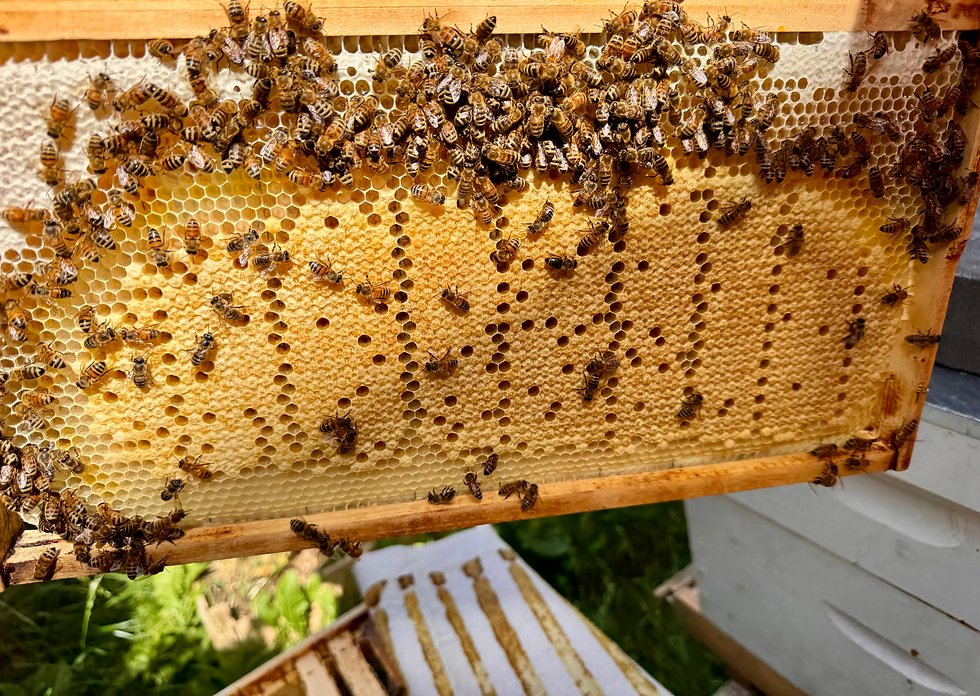
The parent colony that produced the swarm should also be checked. By June, a new queen may have emerged, mated, and begun laying eggs. While many beekeepers hope to spot the queen herself, it is not always necessary.
The brood tells the story. If you see eggs, larvae, capped brood, and a healthy brood pattern, the colony has likely accepted and established its new queen. Sometimes there is no need to spend time searching for the queen when the evidence of her work is already present.
Time for Honey Supers
As nectar flows increase, June is often the time to add honey supers.
Providing adequate storage space allows the colony to continue bringing in nectar and reduces congestion within the brood nest. During hot weather and strong bloom periods, colonies can fill available space surprisingly quickly, so regular inspections help determine when additional supers may be needed.
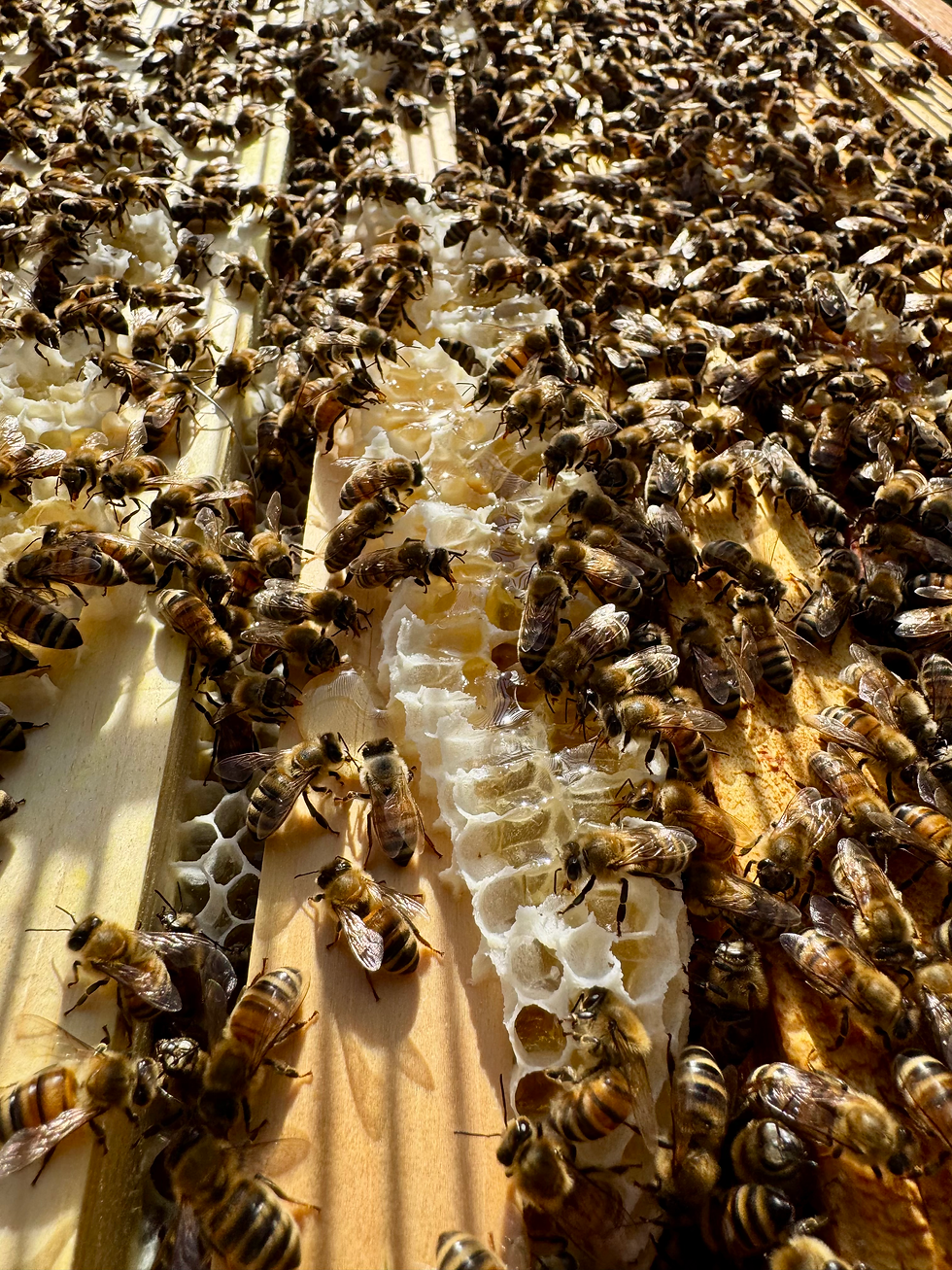
Adding space before it becomes urgent is often easier than reacting after the bees have already filled every frame. A good rule of thumb is to stay ahead of the colony and add room before the hive becomes crowded.
Watch for Crowding
Even after a colony has swarmed, the swarming impulse may not be completely over.
The combination of hot weather, abundant forage, and a rapidly expanding population means colonies can become crowded again. Continue monitoring available space, queen cell development, and overall hive conditions.
A crowded hive can quickly begin preparing additional swarm cells if conditions are favourable. Regular inspections help identify these signs early and allow beekeepers to respond before another swarm leaves the apiary.
June Hive Checklist
In June, check for:
Enough space in the brood nest
Drawn comb and nectar storage
Pollen coming into the hive
Eggs, larvae, and capped brood
Signs of a laying queen
Crowding or backfilling
Queen cells or swarm preparations
Whether honey supers are needed
June is a month of abundance, but it also rewards attention. Give your bees room to grow, watch how the colonies develop, and enjoy the remarkable pace of life in the hive as summer begins.
Comments